Store-brand produce standards
The label proves the product is organic; the retailer’s public standards show how much—or how little—shoppers can verify about the private-label system behind it.
- Published
- Category
- Produce
- Sources
- 28 cited
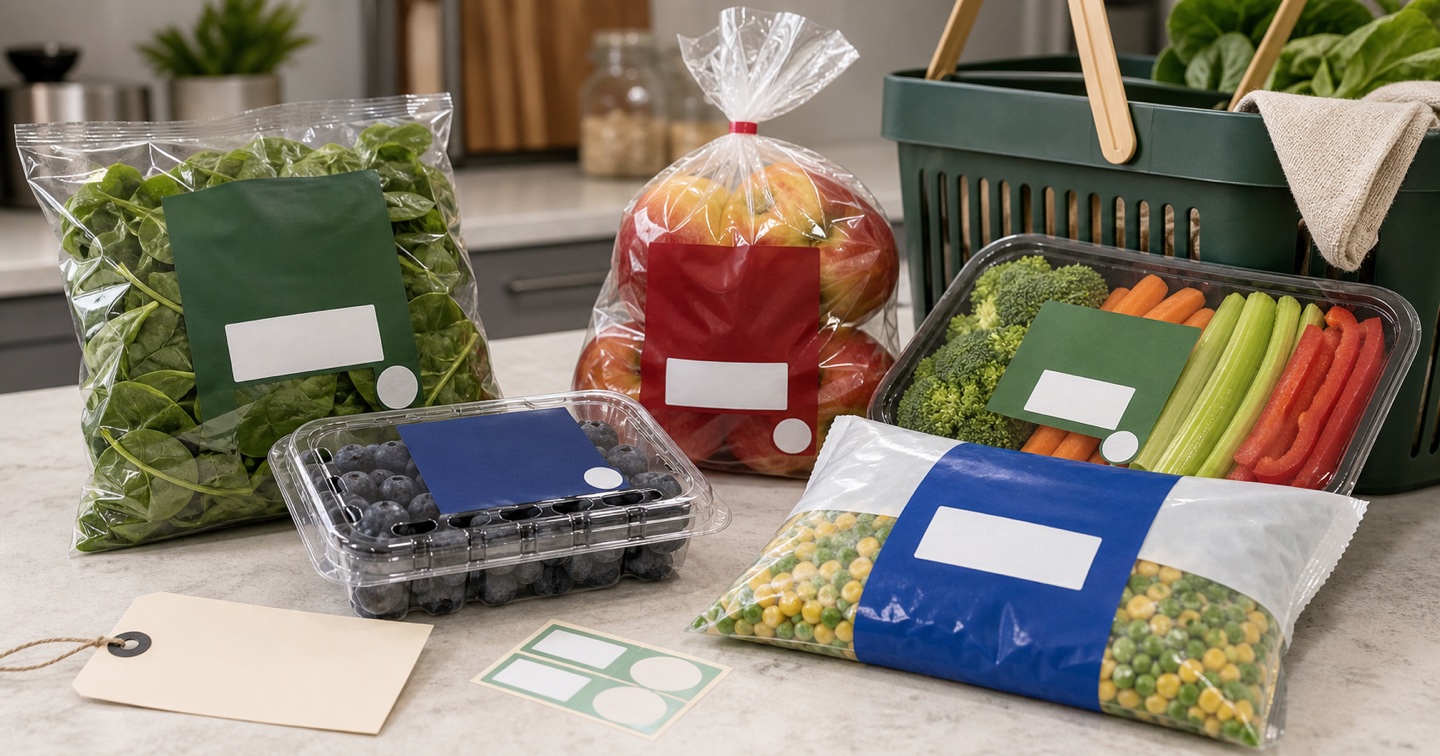
A store brand can look unusually simple in the freezer aisle: one retailer name, one organic seal, one ingredient. The supply chain behind that bag is usually less visible. A private-label retailer may set supplier requirements, run audit programs, maintain recall systems, and publish sourcing policies without naming the farm, processor, certifier, or country tied to the exact bag in your hand.
That distinction drives this comparison. Fridgeful reviewed five exact U.S. private-label bags of frozen organic blueberries: Good & Gather Organic Frozen Blueberries, 32 ounces; Great Value Organic Frozen Blueberries, 10 ounces; Simple Truth Organic Frozen Blueberries, 10 ounces; 365 by Whole Foods Market Organic Wild Blueberries, 10 ounces; and Simply Nature Organic Blueberries, 24 ounces.
The result is an evidence ranking. It is not a health claim or a verdict on taste, nutrition, safety, pesticide exposure, environmental impact, labor conditions, or value. Good & Gather leads at 94 because Target exposes the strongest combined exact-product, quality-system, organic, and retailer-footprint trail in this set. Great Value follows at 83, Simple Truth at 82, 365 at 73, and Simply Nature at 69. A lower score means Fridgeful found less public evidence that could be tied to the shopping decision—not that the berries are worse.
What “standards” can and cannot tell you
Private-label standards operate at several levels. The exact product page may establish the brand, food, package size, ingredient, and a shopper-facing organic claim. A retailer policy may explain how suppliers are approved or audited. A corporate filing or company page may show the retailer’s U.S. reach. Federal sources define what the USDA Organic label means. Those are useful facts, but they are not interchangeable.
USDA’s Organic Basics explains that certified operations follow federal organic regulations and are overseen through certification. USDA’s organic-labeling guidance explains the label categories and their use. Neither source says an organic berry has zero pesticide exposure, zero residues, better nutrition, or a particular origin. Organic status is a regulated production-and-labeling signal, not a universal superiority claim.
Frozen berries also have a category-level food-safety context. FDA’s prevention strategy for fresh and frozen berries addresses viral hazards across the category and supply chain. That makes retailer controls and traceability meaningful. It does not justify assigning an outbreak, sampling result, or safety outcome to any bag reviewed here unless a source names that exact product or lot.
How Fridgeful scored the bags
The fixed 100-point rubric rewards seven public-evidence signals: exact product identity, 15; supplier and audit disclosure, 20; food-safety and quality controls, 20; organic and origin evidence, 15; traceability and recall evidence, 15; availability and currency, 10; and claim discipline, 5. The score is deliberately conservative. Retailer-wide policies receive credit as policy, but they are not treated as proof that a named farm, facility, audit, or country applies to the exact bag. Store-locator and delivery badges were not used as the main availability basis because they are temporary and location-dependent.
Prices were also excluded. A promotion can change within hours, and a larger bag is not automatically better if a household cannot finish it. Package size is reported so shoppers can plan, but this article does not convert size into a value or waste score.
1. Good & Gather Organic Frozen Blueberries — 94/100
Target’s exact 32-ounce listing gives the clearest product identity in the set and connects directly to a retailer-owned brand. The larger evidence advantage comes from Target’s public control-system material. Its Food Safety page and broader Product Safety & Quality Assurance material describe retailer-level programs, while its audit program adds supplier-governance context. Target’s 2025 annual-report business section supports broad U.S. retailer relevance.
That is a strong public trail, but it stops short of full bag-level traceability. Fridgeful did not find a public current farm, processor, certifier, facility, lot, or country record linked to this exact 32-ounce bag. A corporate audit program shows that a control system exists; it does not show the result of an audit for this product. The current physical package remains the best source for the certifier, origin statement, lot code, and handling directions.
Score: 15 + 20 + 20 + 11 + 14 + 10 + 4 = 94.
2. Great Value Organic Frozen Blueberries — 83/100
Walmart’s exact 10-ounce listing establishes a real Great Value organic frozen-blueberry item. Walmart also publishes substantial supplier-level infrastructure. Its Audits and Certifications and Compliance Areas pages describe requirements that can apply across supplier relationships, and its health, wellness, and product-safety requirements provide more formal documentation. Walmart’s fiscal 2026 Form 10-K supports the strongest broad retail-footprint evidence in this field.
The limitation is attachment. Walmart’s system-level documents do not name the farm, processor, certifier, facility, or audit result behind item 12512014. Product-page material can also be supplier-provided, so it should not be treated as independent verification of every marketing statement. Great Value therefore scores well on retailer controls and channel relevance, but below Good & Gather on the combined exact-product and claim-discipline trail.
Score: 12 + 18 + 18 + 10 + 12 + 10 + 3 = 83.
3. Simple Truth Organic Frozen Blueberries — 82/100
Kroger’s exact 10-ounce product page is unusually useful because its stable product identifier makes the reviewed bag clear. The page describes blueberries from organic farms “around the world.” That communicates a multi-origin sourcing model, but it does not identify the country, farm, harvest, or processor for the bag a shopper will receive.
Kroger’s Supplier Hub, document library, and Our Brands vendor certification policy show that private-label vendors enter a real documentation and certification structure. Kroger’s current corporate filing supports broad multi-banner U.S. relevance. As with the other retailers, none of those sources makes a current supplier, audit result, or origin visible for this exact bag.
Simple Truth lands one point behind Great Value because the exact product is clear and the vendor system is meaningful, but the public bag-level bridge remains thin. “Around the world” should be read as a limitation on origin specificity, not as negative evidence about quality.
Score: 15 + 17 + 18 + 10 + 11 + 9 + 2 = 82.
4. 365 Organic Wild Blueberries — 73/100
Whole Foods Market’s exact 10-ounce listing establishes a distinct product: organic wild blueberries, not simply another interchangeable cultivated-blueberry bag. Whole Foods also publishes a 365 brand explanation, retailer-wide quality standards, and supplier information.
Those sources make the retailer’s standards posture visible, but the public exact-bag chain is incomplete. Fridgeful did not find a current farm, processor, certifier, facility, audit result, or country linked to this 10-ounce item. Whole Foods’ standards pages also cover many departments and claims; broad standards cannot be silently transferred to frozen blueberries unless the page or package makes the connection. The “wild” identity earns clarity credit only. It is not scored as healthier, tastier, safer, more sustainable, or more nutritious.
Score: 12 + 11 + 10 + 12 + 15 + 9 + 4 = 73.
5. Simply Nature Organic Blueberries — 69/100
ALDI’s current 24-ounce catalog page clears the basic exact-product gate. ALDI’s Quality Brands page provides private-label context, its supplier FAQs show a supplier channel, and its recall page shows a public mechanism for product-specific notices. ALDI 101 supports meaningful U.S. retailer reach.
The thinner score reflects what is not public at the exact-bag level. Fridgeful did not find a current named supplier, farm, processor, certifier, facility, country, or product-specific audit record attached to this item. A recall page is useful infrastructure, but an empty or unrelated recall record is not proof that a product is safer. Likewise, ALDI’s store reach does not prove this 24-ounce bag is carried in every market. The package should control for certification, origin, lot, date, and handling.
Score: 12 + 18 + 16 + 10 + 7 + 4 + 2 = 69.
Fridgeful Signal Ranking
| Rank | Exact private-label bag | Score | Criterion vector | Evidence reading |
|---|---|---|---|---|
| 1 | Good & Gather Organic Frozen Blueberries, 32 oz | 94 | 15/20/20/11/14/10/4 | Strongest combined exact-item, retailer-system, and availability trail; no public farm or processor link. |
| 2 | Great Value Organic Frozen Blueberries, 10 oz | 83 | 12/18/18/10/12/10/3 | Strong supplier-control and footprint evidence; system documents are not exact-bag audits. |
| 3 | Simple Truth Organic Frozen Blueberries, 10 oz | 82 | 15/17/18/10/11/9/2 | Clear exact item and vendor framework; “around the world” is not lot-level origin. |
| 4 | 365 Organic Wild Blueberries, 10 oz | 73 | 12/11/10/12/15/9/4 | Clear wild-organic identity and channel evidence; broad standards are weakly attached to the bag. |
| 5 | Simply Nature Organic Blueberries, 24 oz | 69 | 12/18/16/10/7/4/2 | Real exact item and private-label system, but the thinnest public SKU-level bridge in this set. |
How to use the ranking in the freezer aisle
Start with the package, not the score. Confirm that the product name and size match the item reviewed. Look for the USDA Organic mark and the certifier statement, read the country-of-origin wording, and keep the lot code and receipt until the food is used. Online pages can lag packaging changes.
Then choose a size your household can realistically finish. A 32-ounce bag can reduce purchase frequency for a frequent smoothie or baking household; it can also sit unused in a household that needs occasional small portions. This article did not test seals, freezer burn, sensory quality, or actual household discard, so it cannot turn package size into a low-waste conclusion.
Finally, keep the claim boundaries intact. A strong score means the retailer gives shoppers more public evidence to inspect. It does not mean Fridgeful tested the berries, audited a facility, verified a farm, or proved a better health or safety outcome. If a package, recall notice, or retailer communication conflicts with this July 26, 2026 snapshot, the current product-specific information wins.
Sources
- Organic Frozen Blueberries, 32 oz, Good & Gather. Target. Accessed 2026-07-26.
- Food Safety Quality and Regulatory Compliance. Target Corporation. Accessed 2026-07-26.
- Product Safety and Quality Assurance. Target Corporation. Accessed 2026-07-26.
- Responsible Supply Chains: Audit Program. Target Corporation. Accessed 2026-07-26.
- 2025 Annual Report, Item 1: Business. Target Corporation. Accessed 2026-07-26.
- Great Value Organic Frozen Blueberries, 10 oz. Walmart. Accessed 2026-07-26.
- Supplier Audits and Certifications. Walmart. Accessed 2026-07-26.
- Supplier Compliance Areas. Walmart. Accessed 2026-07-26.
- Health, Wellness and Product Safety Requirements. Walmart. Accessed 2026-07-26.
- Fiscal 2026 Form 10-K. Walmart Inc.. Accessed 2026-07-26.
- Simple Truth Organic Frozen Blueberries, 10 oz. Kroger. Accessed 2026-07-26.
- Supplier Hub. The Kroger Co.. Accessed 2026-07-26.
- Supplier Document Library. The Kroger Co.. Accessed 2026-07-26.
- Our Brands Vendor Certification Policy. The Kroger Co.. Accessed 2026-07-26.
- Fiscal 2025 Form 10-K. The Kroger Co., U.S. Securities and Exchange Commission. Accessed 2026-07-26.
- 365 by Whole Foods Market Organic Wild Blueberries, 10 oz. Whole Foods Market. Accessed 2026-07-26.
- 365 Brand. Whole Foods Market. Accessed 2026-07-26.
- Quality Standards. Whole Foods Market. Accessed 2026-07-26.
- Information for Potential Suppliers. Whole Foods Market. Accessed 2026-07-26.
- Company Information. Whole Foods Market. Accessed 2026-07-26.
- Simply Nature Organic Blueberries, 24 oz. ALDI US. Accessed 2026-07-26.
- Quality Brands. ALDI US. Accessed 2026-07-26.
- Supplier FAQs. ALDI US. Accessed 2026-07-26.
- Product Recalls. ALDI US. Accessed 2026-07-26.
- ALDI 101. ALDI US. Accessed 2026-07-26.
- USDA Certified Organic: Understanding the Basics. USDA Agricultural Marketing Service. Accessed 2026-07-26.
- Labeling Organic Products. USDA Agricultural Marketing Service. Accessed 2026-07-26.
- Summary of FDA's Strategy to Prevent Norovirus and Hepatitis A Outbreaks Associated with Fresh and Frozen Berries. U.S. Food and Drug Administration. Accessed 2026-07-26.